

in Politics
The Electoral College, explained
https://www.youtube.com/watch?v=ajavsMbCapY

Federal Government The federal government is composed of 3 distinct branches: legislative, executive, and judicial Congress (legislature) Responsibilities Pass laws (legislation) – Passing legislation requires agreement of both House and Senate. Members (535 members) Senate (100 senators) The Senate is composed of 100 Senators, 2 for each state. House of Representatives (435 representatives) The House […] More

Market capitalization is the total dollar market value of all of a company’s outstanding shares.

Learn about the leading U.S. stock market indexes and get an introduction to how they are utilized in the market.

Gross domestic product (GDP) is the monetary value of all finished goods and services made within a country during a specific period.
It is used as a comprehensive scorecard, or metric, of a given country’s economic health.

A school of thought in an intellectual tradition, a particular way of thinking, or a perspective that a group of people share in common. More
Value investing is when you buy stock in firms whose share prices are lower than their fundamentals suggest they should be. Value investing is like purchasing shares currently on sale: When other investors realize what they’re missing out on, they’ll purchase up the stock, the price will go up, and you’ll profit. A low P/E […] More
Are you a trader or an investor? Well, it depends on how you want to approach time, activity, and risk. Learn about the differences between a long-term investor and a short-term trader, so you can decide what’s best for you.
Economic policy is a tool used by the powers at be in the United States to try and control the economy. There are two types of economic policy, monetary policy and fiscal policy. These two levers on the economy do the following: Monetary policy is the Federal Reserve’s efforts to grow the economy by changing […] More
The Federal Reserve, or the Fed, is an important and influential part of the U.S. economy. But what exactly does it do? In this video from the Income Investing course, our Education Coach gives you a simple explanation.
When the economy grows too quickly or grows for a long time, it can lead to inflation. Inflation is the rising cost of goods and services. To reduce inflation, the Fed increases interest rates making it more expensive to borrow money. When it’s too expensive to borrow money businesses will reduce expansion and consumers will […] More

There are numerous job reports including weekly jobless claims, Job Openings and Labor Turnover Survey (JOLTS), and the ADP Employment report, but the Employment Situation report is the most comprehensive jobs report because it tracks the unemployment rate, Nonfarm Payrolls, the workforce participation rate, and average hourly earnings. Many investors use this report to gauge economic strength. At times, it can even move the markets, so it’s important to understand the Employment Situation report.
When placing trades, the order type you choose can have a big impact on when, how, and at what price your order gets filled. We’ll break down three common order types: market orders, limit orders, and stop orders.
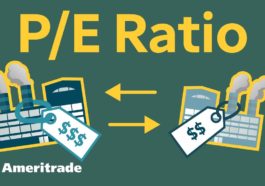
The price-to-earnings, or P/E, ratio compares a stock’s price to its annual earnings per share, or EPS. It measures how much an investor is paying for a stock compared to each dollar of a company’s annual earnings. Investors often use the P/E ratio to compare the valuation of two or more companies and help determine if a stock is overvalued or undervalued.
Don't have an account? Register
Enter your account data and we will send you a link to reset your password.
To use social login you have to agree with the storage and handling of your data by this website. Privacy policy
AcceptHere you'll find all collections you've created before.